
Skip to content

← The Sustainability Blueprint for the World’s Premium Brands

Chapter 06 of 10

Who’s Leading and Why

Leaders are not defined by ambition, but by integration.

They embed sustainability into design, sourcing, and decision-making—not as an add-on, but as part of the business model. Others remain surface-level, limiting progress despite similar resources.

A sheer silk scarf drifting in the air

A small group of premium brands has moved beyond sustainability as a reporting exercise and embedded it into how products are conceived, designed, and delivered. These leaders are not defined by a single initiative or headline commitment, but by a pattern of consistent choices that connect design, operations, governance, and culture.

What differentiates them is not ambition alone, but how deeply sustainability informs decision-making across the value chain.

Viewed through an analytical lens, these leaders tend to treat sustainability as an intrinsic part of their business model rather than a peripheral attribute. Sustainability shapes how products are designed, how suppliers are selected, and how long-term value is defined. By contrast, many mid-tier performers rely on instrumental approaches, leveraging sustainability primarily as a branding or communications layer enabled by existing operational efficiencies, rather than as a core design principle.

This distinction helps explain why leadership is concentrated among a small cohort, and why progress stalls for others despite similar access to capital or technology.

Adidas

How the world’s second-largest sportswear brand cut total emissions 20% in two years — by transforming a supply chain it doesn’t own.
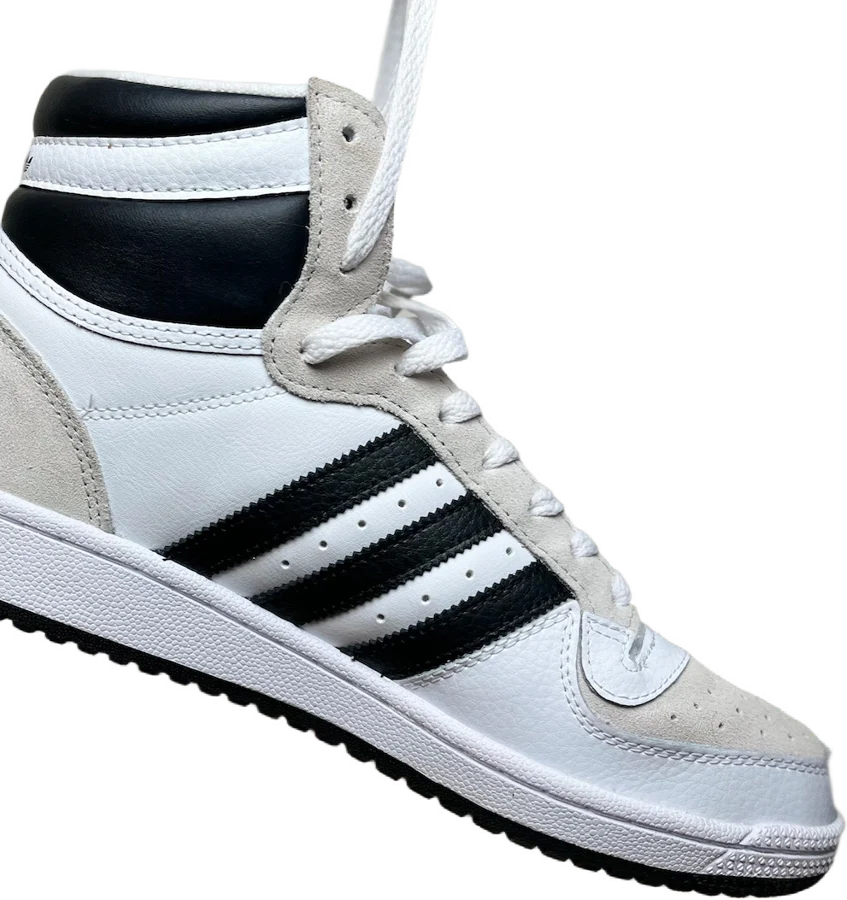
A white high-top adidas sneaker with black stripes

When Adidas set out to address its carbon footprint, it faced a structural problem most brands do not. Adidas outsources nearly 100% of its production to independent manufacturing partners. That means 87% of its total greenhouse gas emissions sit in a supply chain it contracts with but does not control, across 388 facilities in nearly 40 countries. This is not a reporting problem. It is a supplier transformation problem at industrial scale.

The answer is a multi-lever climate strategy approved by the SBTi: a 70% reduction in Scope 1 and 2 emissions by 2030, a 42% reduction in Scope 3, and net-zero by 2050, measured against a 2022 baseline, no offsets. Two years in, total GHG emissions are already down 20%.

Two levers are doing the heavy lifting on Scope 3. The first is coal phase-out, a dedicated Coal Replacement Guideline pushes Tier 1 and 2 suppliers from coal to biomass and natural gas, contributing 0.6 million tonnes of CO₂e reduction between 2022 and 2024. The second is material transition. In 2024, 99% of all polyester came from recycled sources, against an industry average of around 12%. Since 2018, 100% of cotton has come from sustainable sources. Across the total materials portfolio, 42.7% by weight is recycled, across the main collection, not a niche line.

On governance, carbon intensity per product is embedded in the Executive Board’s long-term incentive plan. The social numbers are equally concrete: 35,700 human and labor rights complaints collected through the WOVO platform in 2024, 99% closed by year end.

For companies operating through third-party manufacturing, Adidas makes the argument plainly: a fully outsourced production model and a 20% emissions reduction in two years can coexist, if supplier mandates and governance are built to deliver, not report.

20%

Total GHG reduction vs. 2022 baseline

17%

Scope 1 & 2 reduction vs. 2022 baseline

99%

Recycled polyester share of total polyester

100%

(Since 2018) Sustainable cotton sourcing

99%

Worker grievances resolved via WOVO platform

42%

SBTi Scope 3 reduction target (2030)

Adidas outsources nearly all its production, yet achieved a 20% emissions reduction in two years, with 99% recycled polyester across its global portfolio against a 12% industry average. The hard problem of Scope 3 is solvable. The tools are supplier mandates, coal phase-out, and material transition, not offsets.

The Estée Lauder Companies

How a prestige beauty company is redesigning packaging from the molecule up — combining advanced recycling, refillable systems, and bio-based innovation.

A blue bottle of Estée Lauder makeup remover

Packaging is the most visible environmental challenge in prestige beauty. Every jar, bottle, and compact carries the brand’s promise, but also its material footprint. The Estée Lauder Companies has responded with one of the most comprehensive packaging circularity strategies in consumer goods, attacking the problem at every level: molecular recycling, refillable design, and bio-based material innovation.

By 2024, 71% of ELC’s packaging by weight met its “5 Rs” criteria: recyclable, refillable, reusable, recycled, or recoverable. Refillable formats expanded fivefold compared to 2019, with nine brands now offering reusable components, from Bobbi Brown’s refillable cream pods to Le Labo’s refillable parfum bottles. Over 99% of forest-based fiber packaging carries FSC certification.

ELC’s most forward-looking investments are in advanced recycling chemistry. Through partnerships with SK Chemicals and Eastman, the company is deploying molecular recycling technology that decomposes waste plastic back into its raw chemical building blocks, then reconstitutes them into virgin-quality PET. Unlike mechanical recycling, which degrades material quality over cycles, molecular recycling produces packaging chemically identical to new.

In December 2024, ELC opened a BioTech Hub in Olen, Belgium, developing bio-based ingredients from plants, yeast, and bacteria, advancing the company’s broader ambition to reduce reliance on petrochemical-derived materials across both products and packaging.

ELC’s water results reflect the same rigor: a 41% reduction in water withdrawal at high-stress locations by 2025, surpassing its original 20% target.

The lesson is clear: packaging circularity requires a portfolio approach. Refillable systems reduce volume; advanced recycling maintains quality; bio-based innovation reduces petrochemical dependence. Prestige and sustainability are not in tension, they are converging.

71%

(By weight) Packaging meeting 5 Rs criteria

5x

Refillable format expansion (vs. 2019)

>99%

FSC-certified forest-based fiber

41%

Water withdrawal reduction (high-stress sites)

99.8%

Waste diverted from landfill

60%

Reduction SBTi Scope 3 target (per unit revenue, 2030)

ELC’s molecular recycling partnerships with SK Chemicals and Eastman produce packaging that is chemically identical to new — solving the quality degradation problem that limits conventional recycling.

Golden Goose

How a luxury sneaker brand built a global network of repair ateliers — and proved that extending product life is the ultimate luxury.

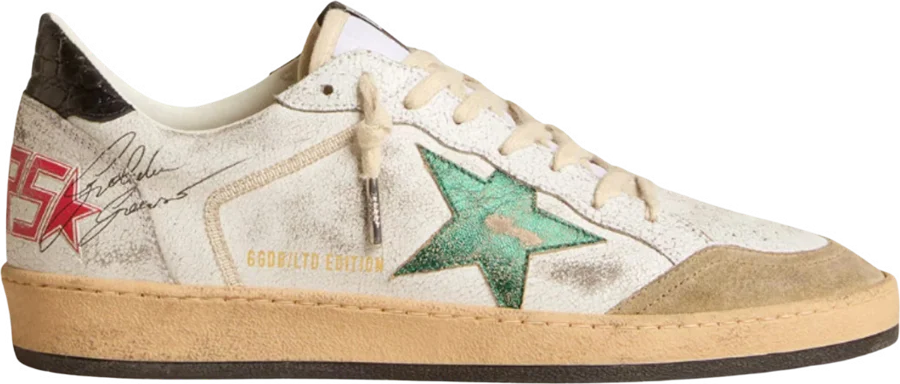
A worn white Golden Goose sneaker with a green star

In an industry conditioned to sell newness, Golden Goose made a counterintuitive bet: that the future of luxury lies in making products last. The Italian sneaker brand launched its Forward Store concept in 2022, reimagining retail around four services — Repair, Remake, Resell, and Recycle, now across eight locations in Milan, New York, Dubai, Paris, and Miami.

The numbers are concrete. In 2023 alone, Golden Goose repaired 24,000 sneakers globally through its Calzoleria and Sartoria services. Each repair — resoling, stitching, insole replacement, extends a product’s usable life by years, directly displacing new production. The Remake service goes further, inviting customers to customize and upcycle existing pieces.

The circularity ambition is backed by structural investment. The Yatay Lab, established near Como in partnership with the Coronet Group, develops bio-based materials. Its flagship innovation, the Yatay B material, achieves a 90% reduction in CO₂ emissions during production and a 65% reduction in water consumption versus conventional leather. The lab won the Sustainable Fashion Awards Groundbreaker prize from CNMI in 2024.

On the supply chain side, Golden Goose acquired two top Italian suppliers, bringing over 250 skilled workers in-house. Between 2022 and 2024, the company completed 265 on-site supplier audits, with 85% of partners already meeting the highest tier of its Social Compliance Framework.

SBTi-validated targets call for a 70% reduction in Scope 1 and 2 emissions and a 40% reduction in Scope 3 intensity per pair by 2030. The company reached 100% renewable electricity at all owned sites by the end of 2024, ahead of schedule.

When repair and craftsmanship become the customer experience, extending product life becomes the ultimate expression of luxury.

24k

Sneakers repaired globally (2023)

8

Forward Stores worldwide

90%

Yatay B CO₂ reduction vs. conventional leather

100%

Renewable electricity at owned sites

265

Supplier audits completed (2022–2024)

70%

SBTi Scope 1 & 2 reduction target (2030)

Golden Goose’s Forward Stores have repaired 24,000 sneakers in a single year — proving that in luxury, longevity is the new exclusivity.

Kering

How a luxury conglomerate partnered with Conservation International to transform one million hectares of farmland — and became the first company to set validated science-based targets for both land and water.

A floral-print shoulder bag with a tan leather strap

In an industry that measures sustainability in percentage points of recycled content, Kering chose a different metric: hectares of land regenerated. Home to Gucci, Saint Laurent, and Balenciaga, the group established the Regenerative Fund for Nature in partnership with Conservation International, with the goal of transforming one million hectares of farms and grazing lands to regenerative agriculture by 2026.

By 2024, the fund’s portfolio had grown to 13 projects across eight countries, enrolling 1.1 million hectares and benefiting 105,000 people. The projects target the raw materials at the base of luxury’s supply chain, leather, cotton, wool, and cashmere, working with farming communities to restore soil health, sequester carbon, and protect biodiversity.

What gives Kering’s approach exceptional credibility is its integration with validated science. In 2024, Kering became the first company globally to adopt validated science-based targets for both land and freshwater under the Science Based Targets Network. The company committed to a 21% reduction in freshwater use and a 3% reduction in land footprint by 2030, assessed using Kering’s proprietary Environmental Profit and Loss methodology, a tool that monetizes environmental impacts across the entire value chain.

At the climate level, Kering reduced total carbon emissions by 15% in 2024 alone, bringing total emissions to approximately 2.16 billion kg CO₂e. Its SBTi-validated targets set Kering on a path to 40% absolute reduction across Scopes 1, 2, and 3 by 2035 from a 2021 baseline, building on its earlier 90% Scope 1 + 2 commitment.

For leaders seeking to move beyond incremental improvements, Kering’s model demonstrates one critical principle: the most credible transition plans address root causes. Rather than relying on end-of-life solutions, Kering is investing in the agricultural systems that produce its raw materials — creating shared value for ecosystems, communities, and the business itself.

1.1 mil

Hectares enrolled in regenerative agriculture

105k

Beneficiaries across 8 countries

15%

Total emissions reduction (2024 YoY)

90%

Reduction in SBTi Scope 1 & 2 target (5-year)

21%

Freshwater use reduction target (2030)

12

Consecutive years in S&P DJSI

Kering became the first company globally to adopt validated science-based targets for both land and freshwater — and its Regenerative Fund has enrolled 1.1 million hectares of farmland across eight countries.

Moncler

How a luxury outerwear giant built a full-spectrum carbon accountability system — and proved that transparency drives transformation.

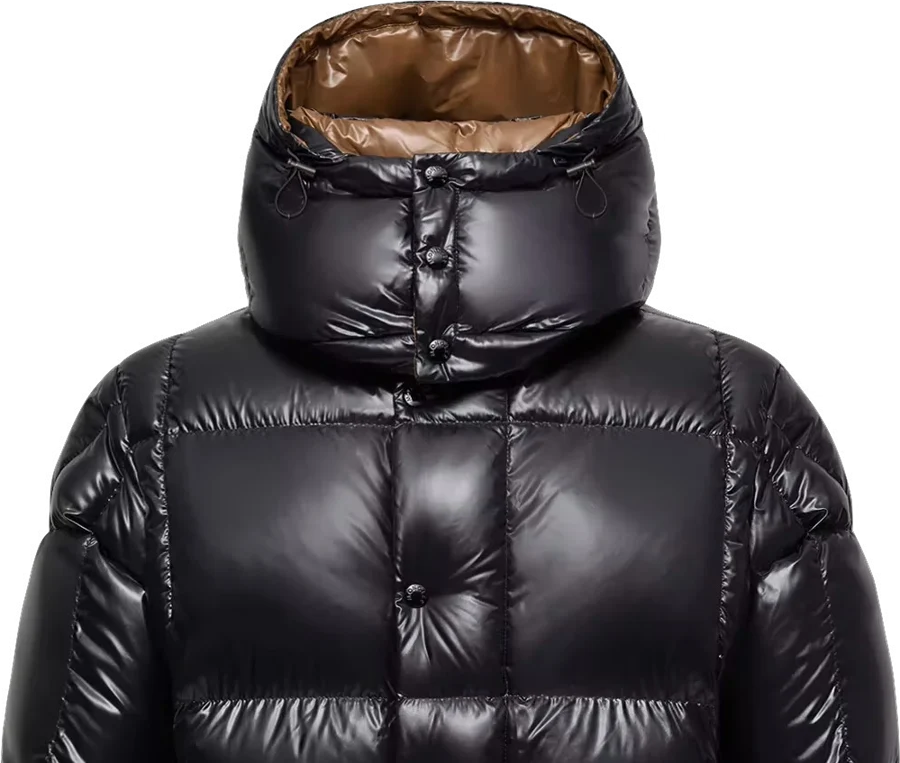
A glossy black hooded down jacket

When Moncler set out to address its carbon footprint, it did not settle for a single headline target. Instead, the Italian luxury group built one of the most comprehensive carbon accountability architectures in the fashion industry, spanning governance, measurement, operations, and supply chain.

At the governance level, a dedicated Control, Risks and Sustainability Committee conducts six-monthly reviews of every climate metric. The sustainability committee, led by the Group Chief Sustainability Officer, translates board ambition into operational targets across all functions, tied to formal audit procedures, creating an unbroken chain of accountability from boardroom to factory floor.

The results are concrete. Moncler achieved carbon neutrality across all directly managed sites in 2024, powered by 100% renewable electricity worldwide. Scope 2 emissions dropped to zero on a market basis. Beyond its own operations, the company committed to Science Based Targets: a 70% reduction in Scope 1 and 2 emissions and a 52% reduction in Scope 3 by 2030, with net-zero by 2050.

What makes Moncler’s approach distinctive is its integration of carbon thinking into product design. In 2024, material substitution alone — recycled nylon, organic cotton, certified wool, avoided approximately 10,000 tonnes of CO₂e. Its proprietary down recycling process uses 70% less water than traditional methods, demonstrating that luxury craftsmanship and environmental stewardship can reinforce each other.

Moncler turned carbon accountability from a reporting exercise into a competitive advantage by embedding measurement, governance, and innovation into a single system, earning it the number-one ranking in Textiles, Apparel and Luxury Goods in the Dow Jones Sustainability Index for the sixth consecutive year.

Zero

Scope 2 emissions (market-based) (2024)

100%

Renewable electricity at all sites

~10k T

CO₂e avoided via material substitution

70%

SBTi Scope 1 & 2 reduction target (2030)

52%

SBTi Scope 3 reduction target (2030)

#1

DJSI ranking (Textiles & Luxury)

Moncler’s proprietary down recycling process uses 70% less water than conventional methods — and its governance system ensures every climate metric is reviewed at board level every six months.

Patagonia

How an outdoor brand built the industry’s deepest commitment to worker dignity — reaching 85,000 workers across its supply chain.

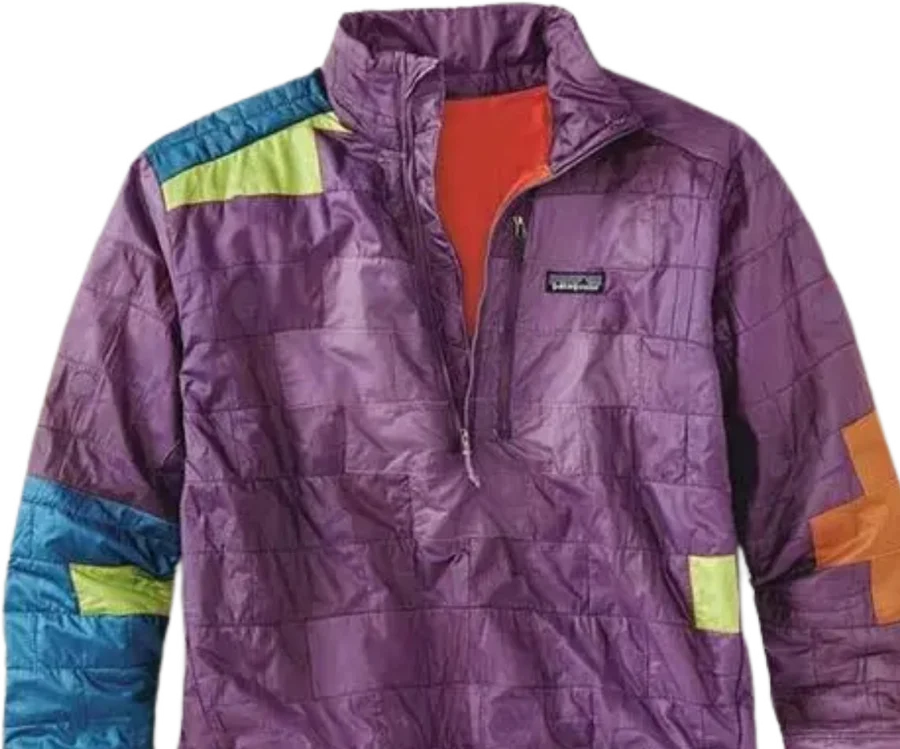
A purple pullover jacket with colourful panels

Patagonia has long been synonymous with environmental activism. But behind the headlines lies what may be the company’s most consequential contribution: a systematic, data-driven commitment to worker welfare that has redefined what “social foundation” means in apparel.

More than 95% of Patagonia’s products are now made in Fair Trade Certified factories — the highest proportion of any major apparel brand globally. Over 85,000 workers have directly benefited, receiving collective funds they allocate themselves: cash bonuses, healthcare, childcare, or improvements to working conditions. Patagonia has distributed $37 million through this mechanism to date.

What elevates the model beyond conventional CSR is its structural ambition. In 2024, Patagonia became the first brand to join IDH’s WARP program, a multi-stakeholder initiative designed to drive industry-wide collective action on living wages. Rather than negotiating bilaterally with individual factories, WARP aligns brands, governments, and worker representatives around shared wage benchmarks. A systemic approach to a systemic problem.

Patagonia backs this with rigorous verification. A third-party labor expert is conducting living-wage testing in Vietnam, while the company continues to work through the Fair Labor Association, of which it is a founding member. Their factories operate under a code of conduct that explicitly embeds living wage standards.

For leaders building a credible social foundation, Patagonia demonstrates that worker welfare is not a cost center. By combining Fair Trade certification, collective bargaining, living wage commitments, and third-party verification, the company has built a model where ethical sourcing strengthens both brand integrity and supply chain resilience.

>95%

Products from Fair Trade Certified factories

85k+

Workers benefited from Fair Trade program

$37m

Collective funds distributed

93%

Recycled polyester usage

89%

Recycled nylon usage

84.4%

Preferred certified material sources

Patagonia became the first brand to join IDH’s WARP program, moving from bilateral factory negotiations to industry-wide collective action on living wages.

PUMA

How linking executive compensation to sustainability targets turned sustainability from aspiration into operational discipline.

A tan and navy PUMA running sneaker

Many companies declare that sustainability is a strategic priority. PUMA made it a condition of every leader’s bonus. The German sportswear group has embedded sustainability targets directly into the variable compensation of its entire global leadership team. Sustainability is not a separate department’s responsibility. It is a core performance metric for every executive in the organization.

The results are visible across the business. In November 2024, PUMA launched Vision 2030, a comprehensive framework elevating its previous 10FOR25 targets across climate, circularity, and human rights. By that point, the company had already achieved 22 out of 28 goals ahead of schedule — including 9 out of 10 PUMA products made with recycled or certified materials, reached a full year early.

On climate, PUMA’s Science-Based Targets are aligned to the 1.5°C pathway: a 90% reduction in Scope 1 and 2 emissions and a 33% reduction in Scope 3 by 2030. Own-site emissions are already down 86% against 2017. On materials, 99.7% of cotton and 99.3% of leather come from certified or recycled sources. The RE:FIBRE program — PUMA’s proprietary textile-to-textile recycling initiative — converts post-consumer waste into virgin-quality polyester, reaching 13.9% penetration in apparel polyester by 2024.

The supply chain tells the same story. PUMA maintains transparency across 153 suppliers in 28 countries, with grievance mechanisms reaching 500,000-plus workers. The company signed legally binding safety accords for Bangladesh and Pakistan, and launched a three-year partnership with the International Organization for Migration to eliminate recruitment fees.

When every leader’s compensation depends on sustainability outcomes, targets stop being aspirational and become operational. PUMA’s model is perhaps the clearest proof that governance design determines sustainability performance.

9/10

Products from recycled/certified materials

86%

Scope 1 & 2 emissions reduction (own sites)

99.7%

Cotton from certified/recycled sources

99.3%

Leather from LWG-certified tanneries

500k+

Workers with access to grievance mechanisms

22/28

Vision 2030 goals achieved ahead of schedule

PUMA ties sustainability targets to every global leader’s bonus — and achieved 22 of 28 sustainability goals ahead of schedule, proving that governance incentives drive measurable results.

Salvatore Ferragamo

How a century-old Italian shoemaker made leather, its most essential material, its most auditable one.

A pair of orange patent leather loafers with bows

Leather is the foundation of Salvatore Ferragamo’s craft. It is also, for any fashion house that depends on it, one of the hardest parts of the supply chain to make transparent. Ferragamo made it the center of its sustainability architecture.

In 2024, over 99% of the Group’s tannery supplier turnover came from Leather Working Group certified sources, with 79% carrying Gold or Silver ratings. But certification alone was not the ambition. In parallel, Ferragamo launched a traceability project mapping the full upstream supply chain for its iconic Fiamma bag, from the farm where the animal was raised, through every processing step, to the finished product, verified against the ICEC TS SC410 standard and designed to comply with the EU Deforestation Regulation ahead of enforcement. Every independent audit returned a clean outcome.

On climate, the Group cut total market-based GHG emissions by 16.4% year-on-year in 2024, with Scope 2 market-based emissions dropping 87.7%, driven by 97.9% renewable electricity across all operations. Ferragamo co-signed the first collective Virtual Power Purchase Agreement in fashion history, alongside eleven other brands under the Fashion Pact, adding over 100,000 MWh per year of new renewable capacity to the grid. Scope 3 emissions fell 15.1%.

Governance enforces this. Since 2023, sustainability targets are embedded in both short and long-term variable remuneration across the leadership structure, 20% of the CEO’s annual bonus is tied to sustainability KPIs including Scope 3 reduction. A sustainability steering committee, chaired by the CEO, meets every two months.

Ferragamo identified where its environmental exposure was most concentrated — leather, upstream logistics, purchased goods — and built its sustainability systems around those pressure points. The scrutiny goes all the way back to the field.

97.9%

Renewable electricity across all operations

87.7%

Scope 2 emissions reduction (2024)

>99%

Tannery turnover from LWG-certified sources

16.4%

Total market-based GHG reduction year-on-year

–43%

Carbon intensity reduction since 2022

~650

Management covered by sustainability-linked bonus

Ferragamo traced the full upstream supply chain of its Fiamma bag — from country and farm of animal origin to finished product — independently verified and built to meet the EU Deforestation Regulation before it came into force

Shiseido

How Japan’s oldest beauty company reinvented packaging manufacturing — and built a consumer collection system that requires no washing, no sorting.

A red jar of Shiseido Essential Energy cream

Shiseido, founded in 1872, is the oldest cosmetics company in Japan. Its approach to circular packaging combines two innovations that together address the full lifecycle of beauty packaging: a manufacturing technology that reduces plastic at production, and a consumer collection system that eliminates barriers to recycling at end of life.

The first is LiquiForm technology, which Shiseido was the first cosmetics company in the world to adopt. By combining bottle molding and filling into a single step, LiquiForm reduces plastic consumption and greenhouse gas emissions by approximately 70% versus standard packaging. Extended to pump dispensers, it achieves a 56% plastic reduction and 48% GHG reduction. Both claims are independently verified through third-party SuMPO EPD certification under ISO 14025.

The second is the BeauRing Project, launched in 2023 in Yokohama. BeauRing is built around a simple insight: consumers will recycle more if you remove friction. Unlike conventional programs requiring washing and sorting, BeauRing accepts containers exactly as used — caps, sponges, and applicator tips still attached. Collected containers are converted to ethanol through a partnership with Sekisui Chemical and Sumitomo Chemical. Shiseido is now scaling trials to produce new cosmetic containers from this recovered material. POLA ORBIS Holdings has joined as a cooperative partner, signaling the model can scale across the industry.

Across its portfolio, Shiseido has switched 76% of packaging to sustainable materials and offers refillable products across 770-plus SKUs spanning 30 brands. Its ELIXIR refill system achieves an 85% plastic reduction versus regular packaging.

Circular packaging works not because consumers are virtuous, but because the design makes it inevitable. Shiseido has built both ends of that system.

~70%

Plastic reduction (LiquiForm technology)

~70%

GHG reduction (LiquiForm vs. standard)

76%

Packaging switched to sustainable materials

770+

Refillable SKUs across portfolio

89%

Renewable electricity ratio (global operations)

A

CDP Climate Change rating

Shiseido’s BeauRing collection system accepts cosmetic containers with no washing or sorting required — removing the friction that stops most consumers from recycling beauty packaging

Swarovski

How a 130-year-old crystal maker turned manufacturing waste into a new product category — cutting resource use by 40% and environmental impact by 34%.

A large faceted green crystal

For over a century, Swarovski’s crystals have been synonymous with precision and brilliance. But the manufacturing process that creates them also generates breakage. ReCreated Crystals, Swarovski’s flagship materials initiative, takes that waste, remelts it, and produces new crystals requiring 40% fewer natural resources and carrying a 34% lower environmental footprint than conventional production.

What began as an internal waste recovery experiment has become a commercial product line featured in over 50 jewelry products, and inspired haute couture collaborations with Viktor & Rolf and Kevin Germanier, whose runway collections used ReCreated Crystals to demonstrate that recycled materials can meet the most demanding aesthetic standards in fashion.

Swarovski’s materials innovation extends beyond crystals. Its lab-grown diamond collections, including the Eternity and Galaxy lines, are produced using 100% renewable energy across growing, cutting, and polishing, and set in 100% recycled gold and silver.

On operations, Swarovski has achieved a 46% total greenhouse gas emissions reduction since 2019 across Scopes 1, 2, and 3. All Asian manufacturing sites run on 100% renewable electricity. The flagship facility in Wattens, Austria, recycles 98% of water used in crystal polishing. Science-based targets call for a 47% reduction in Scope 1 and 2 emissions and a 28% reduction in Scope 3 by 2030. The company is also electrifying glass-melting furnaces and exploring hydrogen power to address hard-to-abate emissions.

Swarovski’s story is a masterclass in turning a liability into an asset. By reimagining manufacturing waste as raw material, the company created a product category that is simultaneously more sustainable and more culturally resonant.

40%

Natural resources saved (ReCreated Crystals)

34%

Environmental footprint reduction

46%

Total GHG emissions reduction since 2019

98%

Water recycling at Wattens facility (polishing)

100%

Renewable electricity at Asian manufacturing

47%

SBTi Scope 1 & 2 reduction target (2030)

Swarovski’s ReCreated Crystals are now featured in 50+ jewelry products and haute couture collections — turning manufacturing waste into a premium product that uses 40% fewer resources.

Reading across these profiles, several patterns emerge. Governance design is a consistent differentiator: the brands that perform strongest have embedded sustainability into board oversight, executive compensation, and formal audit, not left it to a standalone function. Every brand here operates with validated, externally reviewed targets; ambition without third-party substantiation does not appear among them. Supply-chain depth also separates these brands from the broader field, each has invested in extending its sustainability programs beyond Tier 1, whether through supplier development, living wage commitments, or materials transformation at source. Circularity, too, appears not as a pilot but as a commercial program at scale. The unifying thread is operational readiness: each of these brands has built the systems required to substantiate what it claims. That infrastructure, more than any single initiative, is what makes their leadership durable.

Key insight

The unifying thread is operational readiness: each of these brands has built the systems required to substantiate what it claims.

What leaders show us about the future of premium

The brands pulling ahead are those that treat sustainability as a design input, a sourcing discipline, and a long-term strategic capability. Rather than approaching it as a series of isolated initiatives, they integrate sustainability into everyday decision-making, allowing it to compound over time.

For luxury boards and CXOs, this shifts the leadership conversation. The focus moves from whether to engage with sustainability to how effectively the organization is equipped — through data, systems, and incentives — to embed it consistently and at scale.