
A small group of premium brands has moved beyond sustainability as a reporting exercise and embedded it into how products are conceived, designed, and delivered. These leaders are not defined by a single initiative or headline commitment, but by a pattern of consistent choices that connect design, operations, governance, and culture.
What differentiates them is not ambition alone, but how deeply sustainability informs decision-making across the value chain.
Viewed through an analytical lens, these leaders tend to treat sustainability as an intrinsic part of their business model rather than a peripheral attribute. Sustainability shapes how products are designed, how suppliers are selected, and how long-term value is defined. By contrast, many mid-tier performers rely on instrumental approaches, leveraging sustainability primarily as a branding or communications layer enabled by existing operational efficiencies, rather than as a core design principle.
This distinction helps explain why leadership is concentrated among a small cohort, and why progress stalls for others despite similar access to capital or technology.
Adidas
How the world’s second-largest sportswear brand cut total emissions 20% in two years — by transforming a supply chain it doesn’t own.
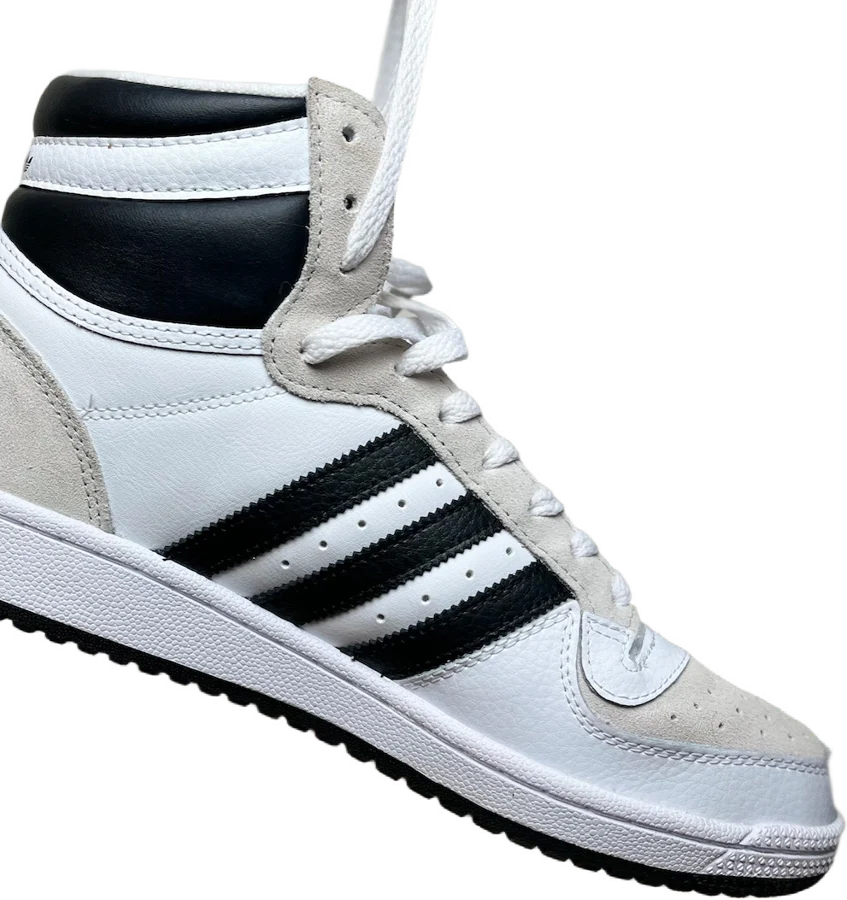
When Adidas set out to address its carbon footprint, it faced a structural problem most brands do not. Adidas outsources nearly 100% of its production to independent manufacturing partners. That means 87% of its total greenhouse gas emissions sit in a supply chain it contracts with but does not control, across 388 facilities in nearly 40 countries. This is not a reporting problem. It is a supplier transformation problem at industrial scale.
The answer is a multi-lever climate strategy approved by the SBTi: a 70% reduction in Scope 1 and 2 emissions by 2030, a 42% reduction in Scope 3, and net-zero by 2050, measured against a 2022 baseline, no offsets. Two years in, total GHG emissions are already down 20%.
Two levers are doing the heavy lifting on Scope 3. The first is coal phase-out, a dedicated Coal Replacement Guideline pushes Tier 1 and 2 suppliers from coal to biomass and natural gas, contributing 0.6 million tonnes of CO₂e reduction between 2022 and 2024. The second is material transition. In 2024, 99% of all polyester came from recycled sources, against an industry average of around 12%. Since 2018, 100% of cotton has come from sustainable sources. Across the total materials portfolio, 42.7% by weight is recycled, across the main collection, not a niche line.
On governance, carbon intensity per product is embedded in the Executive Board’s long-term incentive plan. The social numbers are equally concrete: 35,700 human and labor rights complaints collected through the WOVO platform in 2024, 99% closed by year end.
For companies operating through third-party manufacturing, Adidas makes the argument plainly: a fully outsourced production model and a 20% emissions reduction in two years can coexist, if supplier mandates and governance are built to deliver, not report.
20%
Total GHG reduction vs. 2022 baseline
17%
Scope 1 & 2 reduction vs. 2022 baseline
99%
Recycled polyester share of total polyester
100%
(Since 2018) Sustainable cotton sourcing
99%
Worker grievances resolved via WOVO platform
42%
SBTi Scope 3 reduction target (2030)
Adidas outsources nearly all its production, yet achieved a 20% emissions reduction in two years, with 99% recycled polyester across its global portfolio against a 12% industry average. The hard problem of Scope 3 is solvable. The tools are supplier mandates, coal phase-out, and material transition, not offsets.